
Charxy Talk: Character AI Chat
Language Alphabet AppsEntertainment
4.435.00 Reviews
- Version
- 1.0.2
- Installs
- 500.00K
- Age Rating
- Everyone
Screenshots




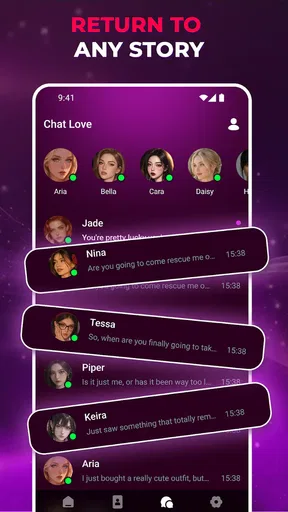

Our Review of Charxy Talk: Character AI Chat
 Analysis by Appyee
I approached Charxy Talk: Character AI Chat as a quick way to explore conversations with a soulmate-style AI rather than as a replacement for real relationships. The idea is simple: you open an entertainment app, choose the kind of conversational experience you want, and begin building a chat that feels more personal than a standard question-and-answer assistant. My first impression was that its appeal depends less on productivity and more on the mood you bring to the conversation.
That distinction matters. If you want an assistant for schedules, research, or precise work, this is not where I would start. If you enjoy imaginative dialogue, gentle companionship, role-play, or testing how an AI responds to personal prompts, the concept is much more relevant. The app is free, aimed at Everyone, and comes from Language Alphabet Apps, so it is easy to consider as a low-commitment experiment.
What to expect from the chat experience
The store summary presents the app as a place to build unique conversations with a soulmate AI. In practice, I would set expectations carefully: the value comes from the conversation you create, not from expecting a perfectly consistent digital partner from the first message. A vague opening usually produces a vague exchange. A clear description of the tone, interests, and type of conversation you want gives the chat a much better chance of feeling personal.
I found the entertainment angle more useful than treating every response as meaningful advice. The app can be a pleasant place to unwind, invent a fictional relationship, rehearse a difficult conversation, or simply see how an AI reacts to a carefully written prompt. It works best when I treat the character as a conversational experience with boundaries, not as a person with independent feelings or dependable knowledge.
The public response suggests that many users are willing to try that idea. Charxy Talk has an average rating of 4.4 from around 4.6 thousand ratings, and it has passed 500 thousand installs. Those figures make it look established enough to attract attention, while the relatively small number of written reviews means I would still judge it by my own first session rather than assuming that every user has the same experience.
Because it is listed under Entertainment, I would compare it with casual chat and character-based apps rather than with messaging tools or serious AI utilities. A normal chatbot is usually better when I need direct answers. A social network is better when I want real people and unpredictable interaction. This app sits between those options: it offers an available conversation partner, but the exchange is artificial and shaped by the prompts I provide.
Who is likely to enjoy it
I think it suits someone who likes conversational role-play but does not want to coordinate with another person. It can also work for users who enjoy writing small scenarios, testing different personalities, or turning an ordinary evening into a light creative exercise. The soulmate framing may appeal to people looking for a warmer tone than they receive from a conventional assistant.
I would be more cautious about recommending it to anyone seeking emotional support for a serious crisis, professional relationship guidance, or a dependable source of facts. An AI can sound confident and caring while still producing an unsuitable response. That is not a special flaw of this app alone, but the intimate framing makes it especially important to keep expectations realistic.
Installing it without overthinking the decision
The app is free, and its content rating is Everyone, which makes the initial decision straightforward for a broad audience. It requires Android 8.0 or later, so anyone using an older Android device should check compatibility before planning around it. The current version is 1.0.2, which also tells me that I should expect a relatively focused experience rather than a mature platform with years of visible evolution.
After installing, I would begin with one purpose instead of trying to test every possible personality at once. For example, I might decide that the first session is only about creating a relaxed evening conversation. That gives me a clear way to judge the replies: do they follow the tone, respond to details, and make it easy to continue?
My practical advice is to avoid opening with only “hello.” That puts all the creative work on the app and makes a disappointing first exchange more likely. A better opening explains the desired style in ordinary language: whether the conversation should be playful, calm, romantic, curious, or fictional. I would also add one or two interests and say what I want to talk about first.
This small preparation is one of the most important differences between a flat session and a useful one. The app cannot read the atmosphere I have in mind unless I describe it. A short, specific setup message is more effective than a long list of demands, because it leaves room for the conversation to develop naturally.
How I would create the first meaningful exchange
For a first successful action, I would give the AI a simple scene with an obvious next question. For instance, I might say that I want a calm conversation after work, mention that I am interested in films and cooking, and ask it to start by asking about my day. This is more useful than asking it to “be my perfect soulmate,” because it gives the exchange a concrete direction.
Once the reply arrives, I would continue by referring to one specific detail rather than changing subjects immediately. If the character asks about my evening, I might answer with a real small event and then ask a related question. That creates a conversational rhythm and lets me see whether the app can maintain the chosen tone.
A useful technique is to correct the experience politely when it drifts. I might write, “Keep the tone light and ask shorter questions,” or “Stay with the film topic for a little longer.” This is not just a workaround; it is part of learning how to use character-based AI. The more clearly I describe the adjustment, the less I have to restart the conversation.
Another practical workflow is to use separate sessions for separate moods. I would not mix a fictional romantic scenario with a serious personal planning conversation in the same thread. Keeping those purposes distinct makes the interaction easier to understand and reduces the chance that an earlier role-play detail influences a later exchange in an unwanted way.
The strongest first-session goal is not to prove that the AI feels human. It is to find out whether the conversation gives me enough continuity and responsiveness to be enjoyable. If I can exchange several messages without constantly repairing the tone, I have found the app's main use case. If every reply feels generic or disconnected, no amount of romantic wording will make it the right tool for me.
A realistic everyday scenario
Imagine finishing a long day and wanting ten minutes of low-pressure conversation without calling a friend. I could open the app, describe my mood, and ask for a warm but not overly dramatic chat about dinner, music, or a show I watched. I would keep the topic ordinary and see whether the AI can make the exchange feel attentive without turning every sentence into exaggerated affection.
That scenario shows both the appeal and the limitation. The app is available when another person is busy, and I can shape the tone without worrying about awkward timing. At the same time, the comfort comes from a designed interaction, not mutual human experience. I would enjoy it as a private wind-down activity, but I would not let it replace checking in with people who genuinely know me.
Small habits that make the app easier to use
The first habit I recommend is to state what kind of response I want. “Ask me one question at a time” produces a different experience from “give me a long imaginative reply.” This is especially helpful during the first few messages, when I am still discovering how the character handles direction.
The second is to provide context gradually. Giving every personal detail at once can make the chat feel forced, while giving no context leaves the AI with little to work from. I prefer sharing one interest, one current mood, and one conversational goal, then adding information only when it becomes relevant.
The third is to treat repetition as a signal to redirect rather than as something I must tolerate. If the exchange circles around the same compliment or question, I would introduce a concrete activity: plan an imaginary weekend, compare two films, invent a short story, or discuss a hobby. Concrete tasks give the conversation structure and reveal whether the app can do more than exchange generic affection.
A fourth useful approach is to separate entertainment from disclosure. I would avoid sharing sensitive information simply because the tone feels intimate. The friendly style can encourage openness, but a convincing conversational manner is not the same as personal trust. Keeping prompts fictional or general is a sensible way to enjoy the experience with fewer concerns.
I would also remember that an AI response can be emotionally persuasive without being accurate. If the conversation turns toward health, money, legal matters, or a serious personal decision, I would move to a more appropriate source. This app is at its best when the consequences are low and the goal is imagination, companionship-style conversation, or casual reflection.
Common points of confusion for new users
The biggest misunderstanding is expecting the word “soulmate” to mean a fully developed personality that understands me immediately. I read it as a theme and a direction for the interaction. The quality still depends on what I write, how I correct the tone, and whether the conversation has a clear subject.
Another confusion is assuming that a warm reply equals genuine emotion. I can appreciate the style without pretending that the AI has human needs or a private life. Keeping that distinction clear makes the experience more comfortable and prevents me from assigning more authority or importance to a response than it deserves.
Some users may also wonder why a conversation suddenly feels less consistent. Character-style chats can lose focus when the topic changes quickly, when prompts contain several conflicting instructions, or when the user expects the AI to remember every detail perfectly. My solution is to restate the key context in one sentence and continue from there instead of arguing with the previous reply.
It is also worth knowing what the app is not. It is not a replacement for a regular messaging service, because the other side is not a human friend. It is not automatically a better general-purpose assistant simply because the tone is more personal. For factual research, task management, or communication with real contacts, I would choose a tool designed specifically for those jobs.
Parents and younger users should still approach the soulmate framing thoughtfully even though the content rating is Everyone. A general age label does not turn an artificial relationship into a substitute for healthy social support. I would encourage balanced use, clear boundaries, and an understanding that entertainment apps should remain one small part of daily life.
How it compares with familiar alternatives
Compared with a standard AI assistant, Charxy Talk is more appealing when the desired result is a mood or relationship-style exchange rather than a concise answer. A general assistant usually wins for structured tasks and factual work. I would choose this app when I want to explore a persona, continue a fictional scenario, or have a softer conversation without building the entire setting from scratch.
Compared with talking to a friend through a normal messaging app, it offers immediate availability and complete control over the topic. The trade-off is authenticity. A friend can surprise me with real experience, challenge my assumptions from a personal perspective, and share responsibility for the relationship. This app can imitate conversational warmth, but it does not provide that human reciprocity.
Compared with a dedicated role-playing platform, the soulmate concept may be more accessible for someone who wants a single, emotionally oriented experience instead of a large world of characters and settings. If I wanted complex storytelling, extensive world-building, or a broad character library, I would look elsewhere. If I wanted a straightforward way to start a personalized chat, this narrower focus could be an advantage.
The free price lowers the barrier to trying it, but free access should not be confused with unlimited value. My time is still the real cost. If the replies do not become more engaging after I provide clear context and a specific activity, I would stop rather than forcing myself to like the concept.
Who should skip it
I would skip this app if I mainly need accurate information, professional support, or communication with real people. I would also avoid relying on it during a period when I am especially vulnerable to confusing simulated affection with genuine care. The more I need accountability, expertise, or human understanding, the less suitable this entertainment-focused chat becomes.
It may also be a poor fit for someone who dislikes guiding an AI. The experience rewards users who are willing to describe the desired tone, redirect a drifting conversation, and accept occasional limitations. Anyone expecting an effortless, perfectly consistent personality may find the setup work frustrating.
On the other hand, users who enjoy experimenting with prompts may find that same flexibility rewarding. The app gives me room to test different conversation styles without needing to prepare a full story or recruit another participant. That makes it a better match for curiosity and casual creativity than for users seeking a fixed, predictable service.
My next-step recommendation
I would give the app a fair trial by planning one short session with a specific goal: create a calm conversation, explore a fictional date, discuss a hobby, or build a small story. I would start with clear context, respond to details, and redirect the AI when the tone becomes repetitive. That process gives the app a genuine chance to show its strengths.
After that first session, I would ask myself three practical questions. Did the conversation become more personal after I supplied context? Could I guide the tone without repeatedly starting over? Did I enjoy the exchange for what it was, rather than wishing it were a real relationship? Those answers are more useful than the rating alone.
Language Alphabet Apps has positioned this release as an accessible entertainment experience, and the current version, 1.0.2, keeps my expectations measured. I like the low-risk entry point and the possibility of creating a chat that feels tailored to a particular mood. I am less convinced for serious emotional dependence, factual decisions, or anyone who wants a fully developed social platform.
My overall view is positive but deliberately grounded. Charxy Talk is worth trying when you want guided, imaginative companionship-style conversation and are comfortable shaping the experience yourself. It succeeds when I give it a scene, a tone, and something specific to discuss. It is not a substitute for friends, counseling, or a general assistant, but as a free entertainment app for experimenting with personal AI dialogue, it offers a clear and approachable starting point.
Verdict
Strengths of Charxy Talk: Character AI Chat
- Wide range of AI characters for different conversation styles and interests.
- Simple chat interface makes starting a roleplay quick and easy.
- Useful for creative writing, brainstorming, and practicing conversations.
- Character responses can help make casual chats feel more engaging.
- New character ideas can provide inspiration when conversations feel repetitive.
Limitations of Charxy Talk: Character AI Chat
- Response quality varies considerably between different characters.
- Some replies may feel repetitive during longer conversations.
- AI characters can occasionally misunderstand context or user intent.
- Advanced features may depend on subscriptions or in-app purchases.
- Users should avoid sharing sensitive personal information in chats.
Similar Picks in This Category
View All
Google Play Games
Google LLC3.9

Netflix
Netflix, Inc.4.8

YouTube Kids
Google LLC4.2

Disney+
Disney4.4

Prime Video
Amazon Mobile LLC4.7

Steam
Valve Corporation3.2
Frequently Asked Questions
What is Charxy Talk: Character AI Chat?
Charxy Talk: Character AI Chat is an artificial-intelligence chat app designed for conversations with virtual characters. Users can typically choose from different personalities or fictional-style profiles and interact through text. The experience is intended for entertainment, role-play, creative writing, and casual conversation rather than replacing professional advice or real human relationships. Available characters and features may vary by app version and device.
How does chatting with characters in Charxy Talk work?
After opening the app, you generally select a character or conversation concept and begin sending messages in a chat interface. The AI generates replies based on the character’s description, the current conversation, and your prompts. Responses can feel creative and engaging, but they may occasionally be repetitive, inaccurate, or inconsistent with the selected personality. Clear prompts usually produce more relevant and enjoyable conversations.
Is Charxy Talk: Character AI Chat free to download and use?
The application may be available as a free download, although some functions can depend on advertising, usage limits, subscriptions, or in-app purchases. Premium access may unlock additional characters, longer conversations, faster responses, or other customization options. Before confirming a purchase, check the current store listing and the app’s pricing screen, since plans, trial periods, and available features can change with updates.
Is Charxy Talk safe for children and suitable for all ages?
Parents should review the official age rating and the app’s content before allowing children to use Charxy Talk. AI character platforms can generate unexpected replies, including mature themes, strong language, or subjects that are unsuitable for younger users, even when the conversation begins innocently. Privacy settings, parental supervision, and avoiding the sharing of personal information are important precautions for every user.
Does Charxy Talk protect my conversations and personal information?
Before using the app extensively, read its privacy policy to understand what information may be collected, how chats are processed, and whether conversation data can be stored or shared. Avoid entering passwords, financial details, precise location data, private photographs, or other sensitive information into an AI chat. Also remember that generated responses are not confidential advice and should not be treated as verified facts.
